

Monastiraki and Psiri are two central Athens neighbourhoods where historic streets and landmarks sit alongside cafés, shops and restaurants. This guide to Athens old town covers how the areas fit together, what to look for on their streets and how Monastiraki station connects you to the Metro.
- Location: Central Athens, around Monastiraki Square and the lanes of Psiri.
- From the hotel: Monastiraki station is about 3 minutes on foot from Emporikon Athens Hotel.
- Metro: Monastiraki station serves Lines 1 and 3.
- Historic stop: The Roman Agora is in the neighbourhood, about 220 metres from Monastiraki station.
Getting your bearings around Monastiraki
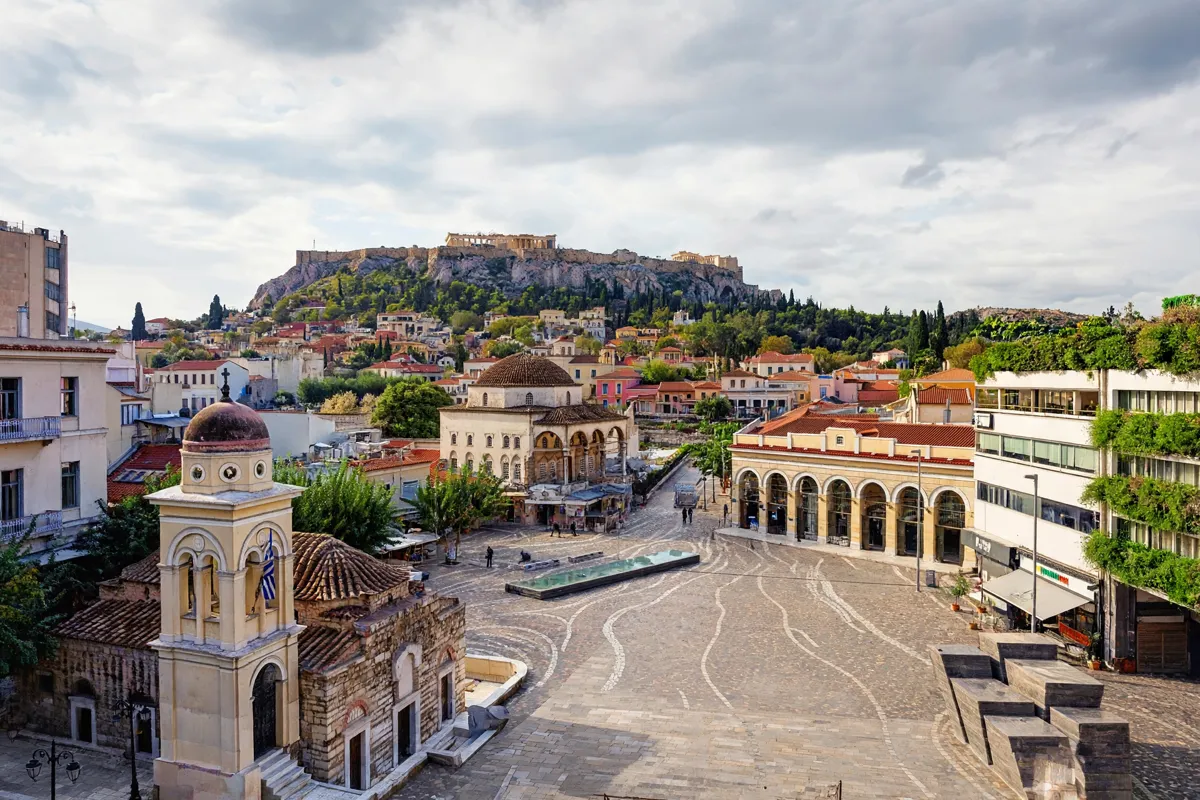
Monastiraki Square is a useful starting point for the neighbourhood: it faces the Acropolis and Plaka, with historic landmarks around its edges. Monastiraki is a district where old and new Athens meet. Its name means “little Monastery,” referring to a monastic compound once on the site.
The small Pantanassa basilica, dating to the 10th century, is the remaining part of that former compound. Other monuments on and around the square include Tzistarakis Mosque and Hadrian’s Library. From the square, the surrounding lanes lead into a dense network of narrow streets that cross at irregular angles.
For shopping streets, look to Adrianou, Pandrosou, Ifaistou, Thiseiou, Agiou Filippou, Astigos and Ermou. Avissinias Square, Monastiraki’s main square, is known for antiques and second-hand goods. The Monastiraki Flea Market guide covers the market’s location and how to visit.
Adrianou Street offers a way to continue on foot: it connects Hadrian’s Library with Thiseio metro station and runs beside the archaeological site of the Ancient Agora.
Psiri streets and landmarks
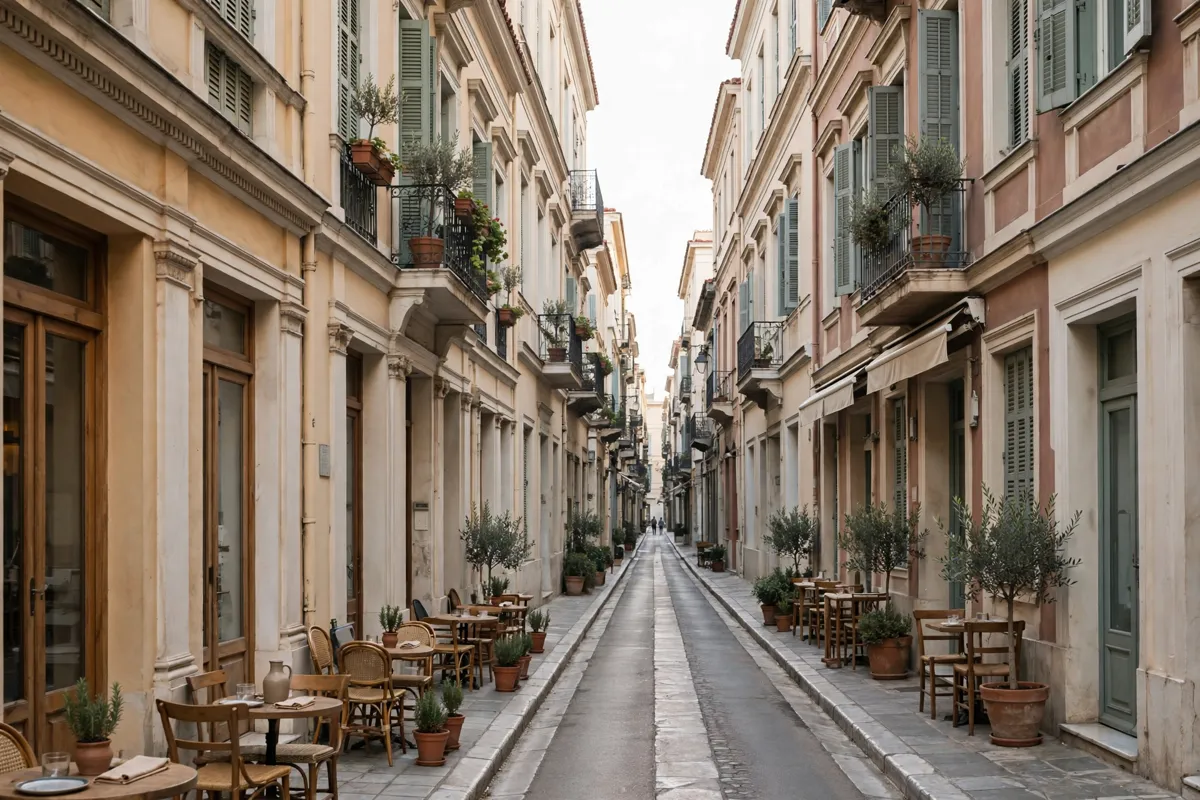
Psiri—also written Psyrri—is the neighbourhood of narrow lanes bounded by Athinas, Ermou and Evripidou streets. Its neoclassical streetscape includes cafés, bars, clubs, restaurants, tavernas, theatres, galleries and antique shops.
The area’s character has changed over time. Former artisan workshops were largely replaced by bars and eateries during early-21st-century gentrification, while craftspeople later returned. As you walk between Monastiraki Square and the Psiri lanes, look out for the contrast between older buildings and businesses serving very different uses.
Monastiraki station is also a useful marker between the districts: Psyrri is about 230 metres away. For getting around Athens beyond this central area, the Athens Metro and public transport guide explains the network.
Walking to the Roman Agora
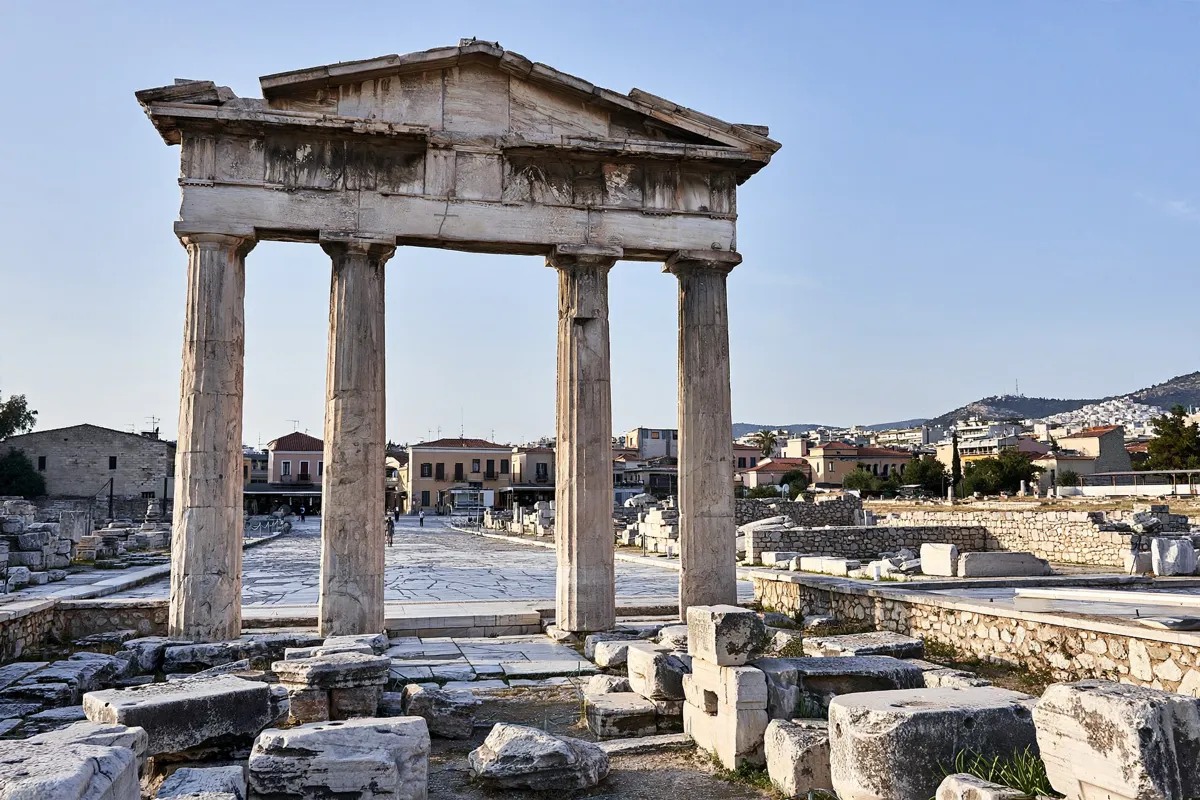
The Gate of Athena Archegetis stands beside the Roman Agora and makes a distinctive landmark as you approach the ancient site.
You can combine the Roman Agora with a walk around Monastiraki Square and Adrianou Street, which passes beside the Ancient Agora. The Roman Agora of Athens guide covers the ancient site in more detail.
How do you get around from Monastiraki?
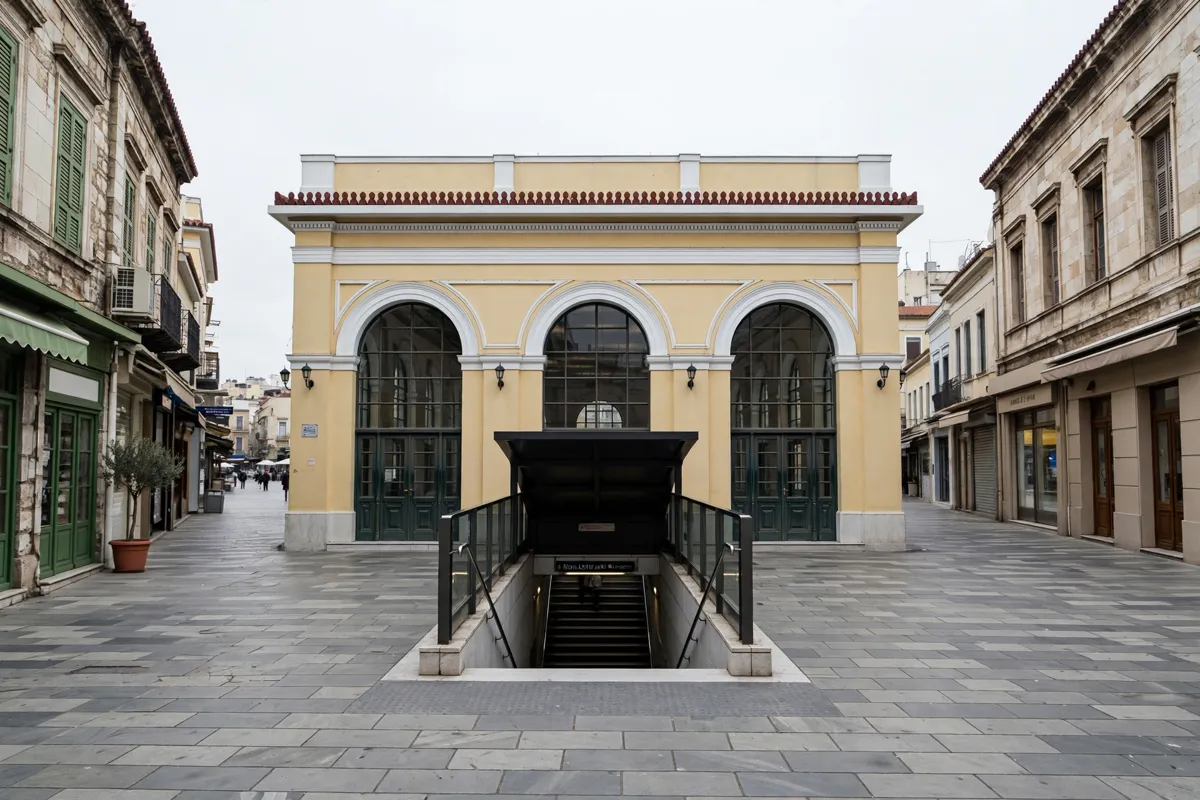
Monastiraki station serves Metro Lines 1 and 3. Its entrances and exits are at Ifaistou/Athinas, Athinas/Themidos and Monastiraki Square; the station has two exits, both equipped with an elevator.
If you’re arriving by Metro, Monastiraki is the stop for the Ancient Agora, Psiri, Plaka and the Monastiraki flea market. Once you’re above ground, the square and surrounding streets make it straightforward to orient yourself before continuing on foot.
Metro schedules can change, so check the official site before you go.
FAQs
What is the difference between Monastiraki and Psiri?
Monastiraki centres on its square and historic landmarks, while Psiri is a neighbourhood of narrow lanes lined with cafés, restaurants, bars, theatres, galleries and antique shops.
Which Metro lines stop at Monastiraki?
Monastiraki station serves Metro Lines 1 and 3.
What is the name Psiri associated with?
The district is also written Psyrri. Its boundaries are Athinas, Ermou and Evripidou streets.
What can you see around Monastiraki Square?
Landmarks around the square include Tzistarakis Mosque, Hadrian’s Library and the Pantanassa basilica.