

The Roman Agora of Athens was the city’s civic centre under Roman rule, and its archaeological remains sit in the Monastiraki area. The site brings together landmarks such as the Gate of Athena Archegetis and the Tower of the Winds, with seasonal opening hours and ticket prices to plan around.
- Location: Dioskouron Street, 10555 Athens
- Opening pattern: Open daily
- Admission: €10 for a full ticket and €5 for a reduced ticket
- Metro: Monastiraki station is a two-minute walk from the site
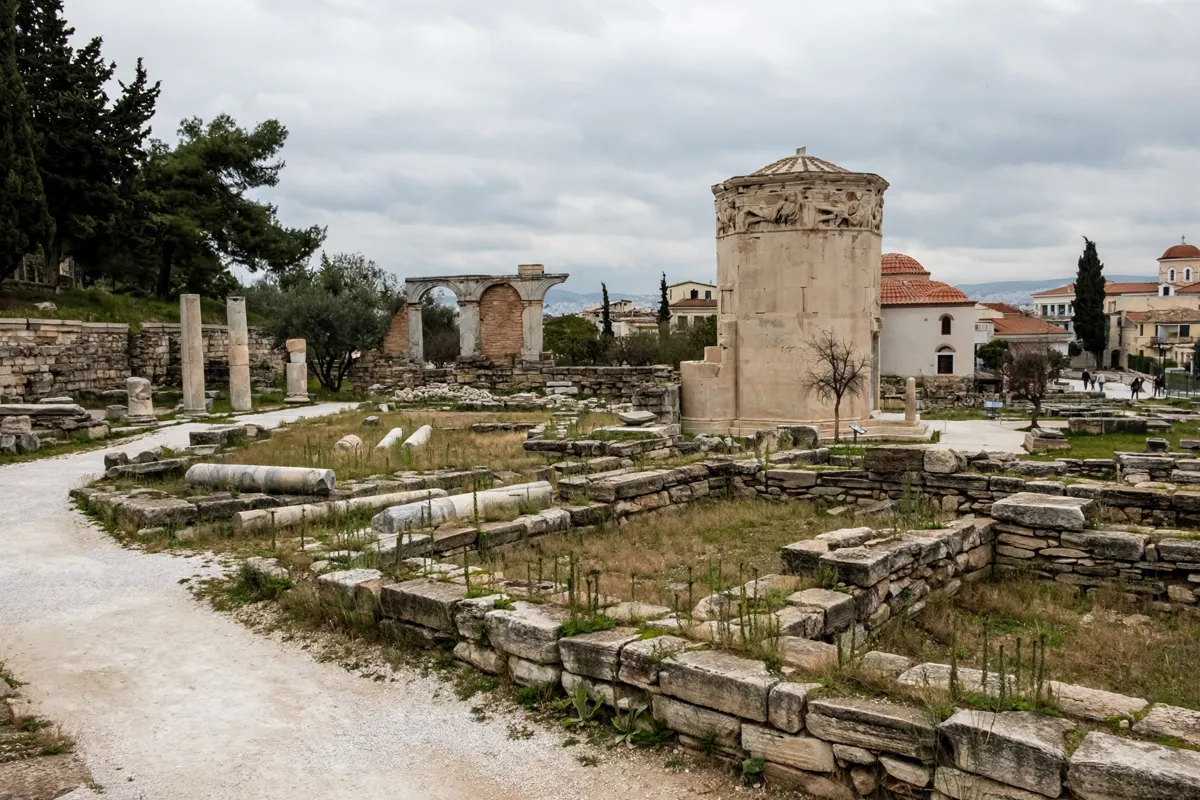
What the Roman Agora is
The Roman Agora was a separate archaeological site from the Ancient Agora and served as Athens’ civic centre under Roman rule. It was built between 19 and 11 BC, with construction financed first by Julius Caesar and later by Emperor Augustus.
As you move through the remains, look for the site’s gateways and the public toilets, known as vespasianae. The first-century remains include benches with holes set around the walls and a sewage pipe beneath them.
The site also has a later history: it housed temporary shelters for refugees from Asia Minor in the 1920s. Excavations began in 1931, after the shelters were dismantled.
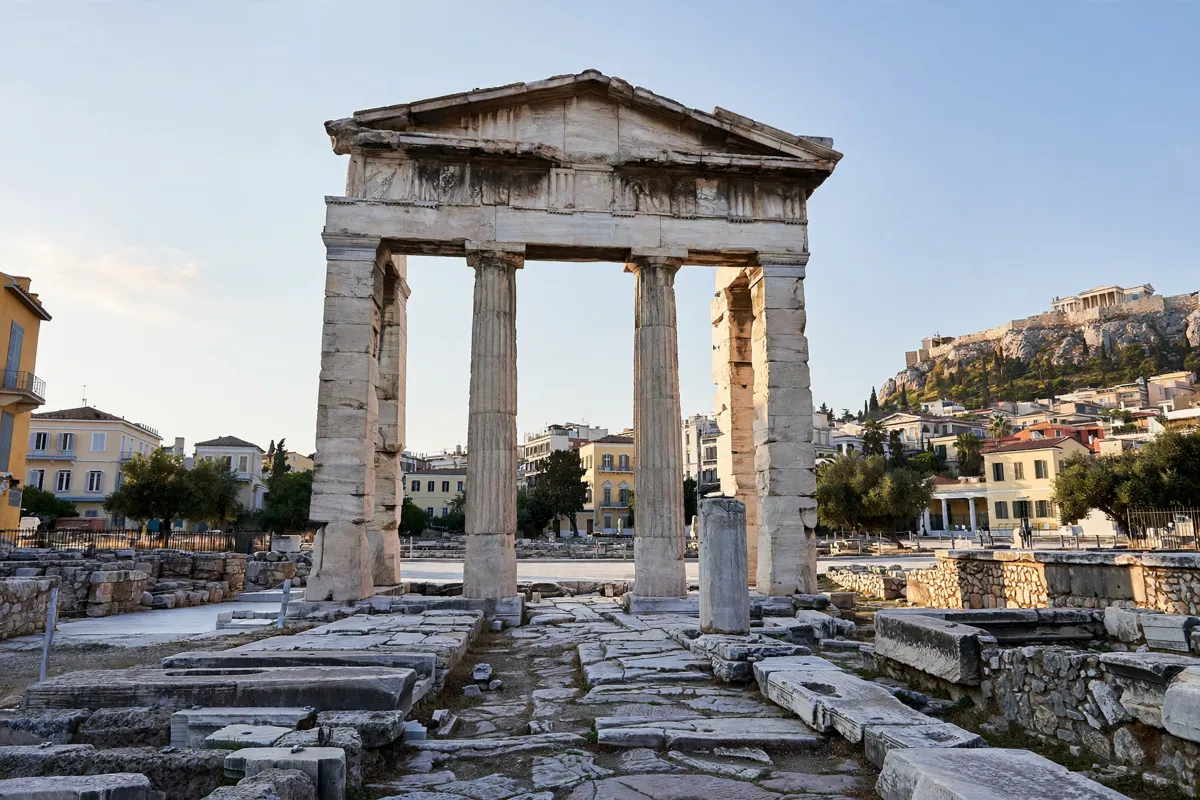
Gate of Athena Archegetis
The Gate of Athena Archegetis marks the western entrance to the Roman Agora. On the east side, the site had a separate Ionic propylon, so the two entrances reflect different edges of the ancient complex.
The gate is one of the site’s defining exterior landmarks. From here, you can take in the archaeological remains and continue toward the Tower of the Winds at the far end of the agora.
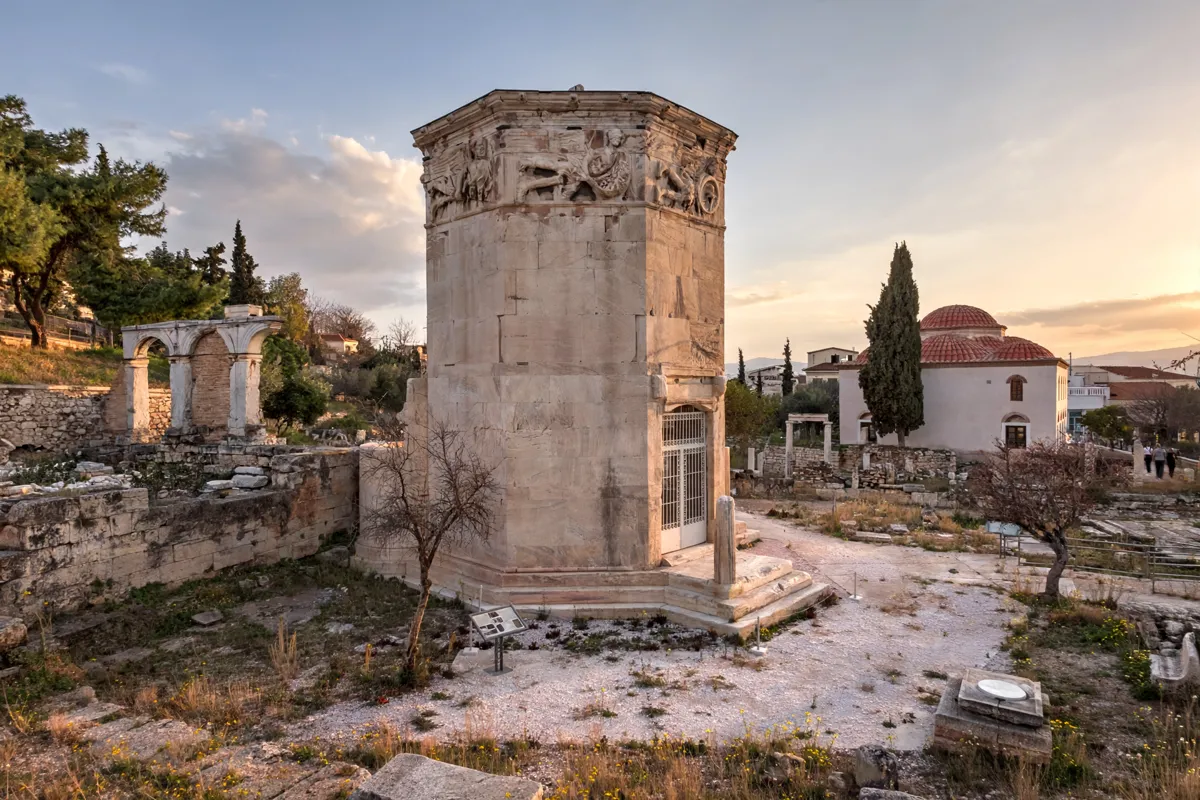
The Tower of the Winds
The Tower of the Winds stands at the far end of the Roman Agora. Its position makes it a natural landmark to look for as you cross the site from the western entrance.
If the tower is a main part of your Athens history itinerary, the Tower of the Winds guide covers its location and visit planning.
How do you get to the Roman Agora from Monastiraki?
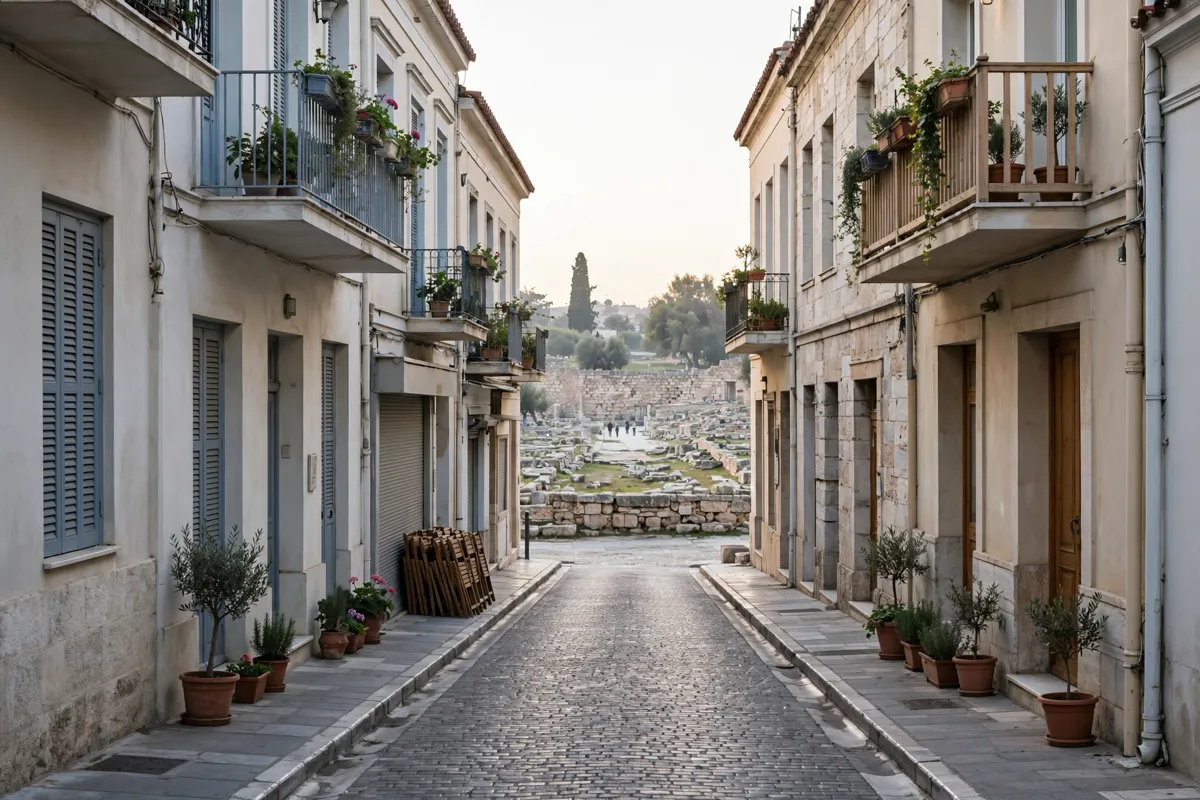
Monastiraki metro station is a two-minute walk from the Roman Agora, and metro lines 1 and 3 serve the station. Exit at Monastiraki for the site. Bus lines 025 and 026 also serve the Monastiraki stop. A walk from Monastiraki through central Athens can connect the visit with other central landmarks.
The address is Dioskouron Street, 10555 Athens, and the site is wheelchair accessible. A stay at Emporikon Athens Hotel is about a five-minute walk from the Roman Agora, making it easy to return after your visit.
A walk through the surrounding streets gives a sense of this central Athens area.
The Monastiraki and Psiri neighbourhood guide gives context on the streets around the site.
Opening hours, tickets and practical details
The Roman Agora’s daily opening hours change through the year, and the last admission is 20 minutes before closing. From April 1 through August 31, hours are 08:00–20:00.
They then shorten in stages: 08:00–19:30 from September 1 through September 15; 08:00–19:00 from September 16 through September 30; 08:00–18:30 from October 1 through October 15; and 08:00–18:00 from October 16 through October 31. From November 1 through March 31, hours are 08:00–15:00.
A full ticket costs €10 and a reduced ticket costs €5. Admission is free on March 6, April 18, May 18, the last weekend of September, October 28, and the first and third Sundays from November 1 through March 31. The site is closed on January 1, March 25, May 1, Easter Sunday, and December 25 and 26.
Before you go, check the official Hellenic Heritage site for current opening hours, closures and ticket details.
FAQs
Is the Roman Agora the same as the Ancient Agora?
No. The Roman Agora is a separate archaeological site that served as Athens’ civic centre under Roman rule.
What are the main landmarks inside the Roman Agora?
The Gate of Athena Archegetis is its western entrance, and the Tower of the Winds stands at the far end of the site.
Which metro station serves the Roman Agora?
Monastiraki station is the closest listed station, served by metro lines 1 and 3.
Is the Roman Agora wheelchair accessible?
The site is marked as wheelchair accessible.